00 An application-only program in agentic & systems architecture

Build systems
that outlive
their makers.

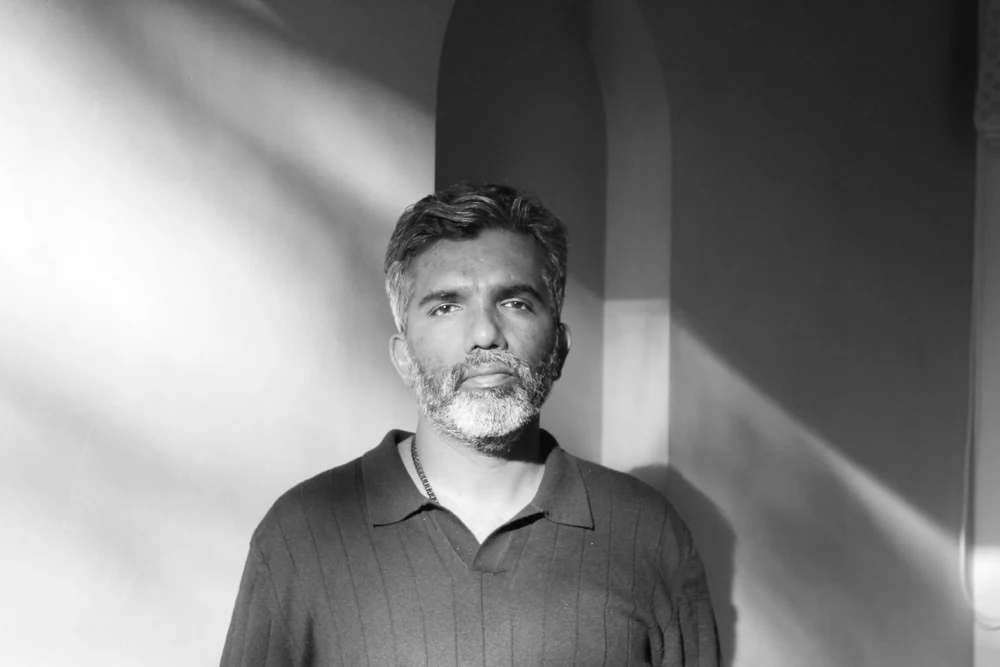
I'm Sunil Mathew26 years building and leading engineering at Google, Amazon, and Walmart, on systems serving up to 100M+ users. This is where I teach the craft of agentic & systems architecture — live, to a small cohort.

Inaugural cohort · starts September 2026 · 8 seats, capped · applications reviewed personally

Sunil Mathew
Sunil MathewEngineering leader · Google, Amazon, Walmart
26 years, shipped at
01 Who this is for

For engineers who've hit the ceiling of what tutorials teach.

You can build. What you want now is judgment — the kind that only comes from having shipped the hard things and lived with the consequences. That's not in a course catalogue. It's transferred, person to person.

// 01

Tech Leads & Staff Engineers

You make the architectural calls your team builds on — and want them to still look right in two years.

// 02

Senior Engineering Managers & Architects

You set technical direction for agentic and distributed systems, where the failure modes are subtle and expensive.

// 03

Senior Engineering Leaders & Directors

You own outcomes across teams. Titles differ across companies; what you need is the depth to back the decisions that matter.

02 The transformation

What you'll be able to do.

By the end, the work shows up in how you decide — under real constraints, with real stakes.

  • A.

    Design agentic systems that hold up in production

    Not demos — architectures with bounded failure, observability, and a cost you can defend.

  • B.

    Prove your system works — don't hope it does

    Build the evaluation harnesses, test sets, and quality gates that turn "it works" into a measurement, and catch regressions before they ship.

  • C.

    Engineer for a model that won't behave the same way twice

    Guardrails, fallbacks, and blast-radius thinking — reliability for systems that are probabilistic by nature.

  • D.

    Break your own system before someone else does

    Threat-model it, red-team it for prompt injection and data exfiltration, and hold the line between instruction and data.

  • E.

    Govern an AI-native team

    Risk-tiered review depth, accountability for the code the AI wrote, and the judgment for where the human directs and where the human steps back.

  • F.

    Make the irreversible calls with confidence

    Read trade-offs, scale, and consistency the way a craftsperson reads grain — knowing where it splits before you cut.

And carry it forward — the real measure of having learned the craft is being able to hand it on.

03 The maker

The program is the experience.
Mine, handed to you directly.

26+
Years building software
3
Fortune-100s · Google, Amazon, Walmart
100M+
Users served by systems built
150
Engineers led across geographies
Sunil Mathew
Sunil Mathew · Bengaluru, India

I didn't learn this from slides. I learned it shipping flagship products at Google — a Generative-AI video editor, and a Workspace platform running ~31 billion executions a week — re-architecting Amazon Prime's membership core, and modernising 300+ products at Walmart from legacy into microservices.

For 26 years I've designed systems at the scale where mistakes are expensive and decisions are irreversible. Somewhere along the way I realised the thing worth passing on wasn't the patterns — those are everywhere now. It was the judgment: the instinct for what will break, what will rot, and what will quietly carry a company for ten years.

Today I lead agentic-AI work — multi-agent orchestration, RAG, evals, LLM-Ops — the systems everyone's now racing to build. That judgment can't be downloaded. It has to be apprenticed. So I stopped only scaling teams and started scaling people — a few at a time, properly.

"Anyone can show you the agent pattern. I can show you the three times it was the wrong pattern in production — and how I knew before it cost us."

This is the part of the craft no curriculum captures — taught the only way it transfers: in a small room, on real problems, with someone who's carried the outcome.

Built and led engineering teams across the US · UK · China · India

— Sunil Mathew
04 Inside the program

A small set of deep things, done properly.

Six weeks. Live, in a small cohort. Built around your real systems, not toy problems.

M1Week 1

Foundations of durable architecture

How agentic systems actually fail — and how to design so the failure is bounded, observable, and boring. The mental models the rest of the program builds on.

M2Weeks 2–4

Agentic systems you'd put your name on

Multi-agent orchestration, RAG, and tool boundaries — then the part most courses skip: evaluation harnesses that prove it works, reliability engineering for nondeterminism, and red-teaming your own system for prompt injection and exfiltration. Demos are easy. Systems you'd run in production are not.

M3Week 5

Scale, consistency & the irreversible trade-offs

Reading CAP in the wild, capacity and cost under load, and the architectural decisions you can't take back — made with the judgment to know which way they'll break.

M4Week 6

Your system, reviewed in the room

You bring a real architecture. We pressure-test it together as a cohort — design, failure modes, evaluation strategy, and the governance around it: risk-tiered review and accountability for what the AI wrote. A senior review the way it should feel.

05 What you leave with

What physically leaves the room.

Not just capabilities — artifacts you keep, and your team inherits.

// your system

Your own architecture, pressure-tested

Reviewed with the cohort — with a concrete path to fix what we find.

// toolkit

A reusable toolkit you keep

An evaluation rubric, a threat-model checklist, a reliability/SLO template, and a review-and-governance framework your team can adopt on Monday.

// the room

A small circle of senior peers

And lifetime access to the cohort room, long after the six weeks are done.

06 Live experience

I've spent a career growing people, not just systems.

The craft only counts if it transfers — and it already has. This is the track record I bring into the room.

// mentored

100+ senior engineers, architects & EMs

Mentored and grown across global organisations — the people who now run the systems.

// coached

100+ engineers coached

One-on-one and in groups, from strong individual contributors toward real technical leadership.

// taught

~100 senior leaders & directors trained

Ran classes on agentic systems and agentic architectures for senior engineering leaders and directors driving the shift to AI.

// built

Hired & grew engineering teams

Built and scaled high-performing teams across the US, UK, China, and India.

// shipping now

Building an agentic-AI system, as a startup

Currently in the trenches — so what you learn is current, not a memory from a past role.

// founding cohort

A founding-cohort rate

The first cohort enrols at a founding rate that won't return once the program has a track record.

07 The format

Small by design.

Eight seats, capped — small enough that every architecture gets the room's full attention. Six weeks of live sessions, architectures pressure-tested together as a cohort, and a group that stays in touch long after.

First cohortStarts September 2026
Enrollment closesRolling — until all 8 seats are filled
Duration6 weeks · live
Cohort size8 seats, capped
Commitment~5 hrs / week
FormatLive online
AdmissionBy application
08 The investment

One cohort. Priced for the few.

Inaugural cohort · founding seats
By application
Investment is shared on application, tailored to your region. The first cohort enrols at a founding rate that rises for the cohorts that follow. Payment plans available.
  • Starts September 2026 — 6 weeks live, in a founding cohort of 8
  • Your real architecture, pressure-tested live with the cohort
  • Direct access to me throughout
  • Lifetime access to the cohort room
Apply for a seat
09 Questions

Before you apply.

Why is it application-only?+

Because the room only works if everyone in it can keep up and contribute. I read every application myself to make sure the cohort is right — for you and for the people you'll learn alongside.

Is this worth it over a recorded course?+

If you want the patterns, buy the book — they're cheap now. This is for the judgment that sits on top of the patterns: live, on your real systems, from someone who's been accountable for the outcome at scale. You're not buying videos — you're buying my attention and 26 years of hard-won judgment.

What if my company pays?+

Many participants expense the program through their employer. I'll provide an ROI letter and an itemised outline your manager can approve.

What does my team get out of it?+

The frameworks come home with you — an evaluation rubric, a threat model, a reliability and review-and-governance template. You don't just leave more capable; your team inherits the discipline.

I'm strong but not "staff level." Should I apply?+

Apply. Seniority on paper matters less than whether you've shipped something you've had to live with. The application tells me.

10 The inaugural cohort

Learn the craft from someone
who lived it.

A small founding cohort. I read every application myself and reply by email.

Prefer email? Ask me a question →